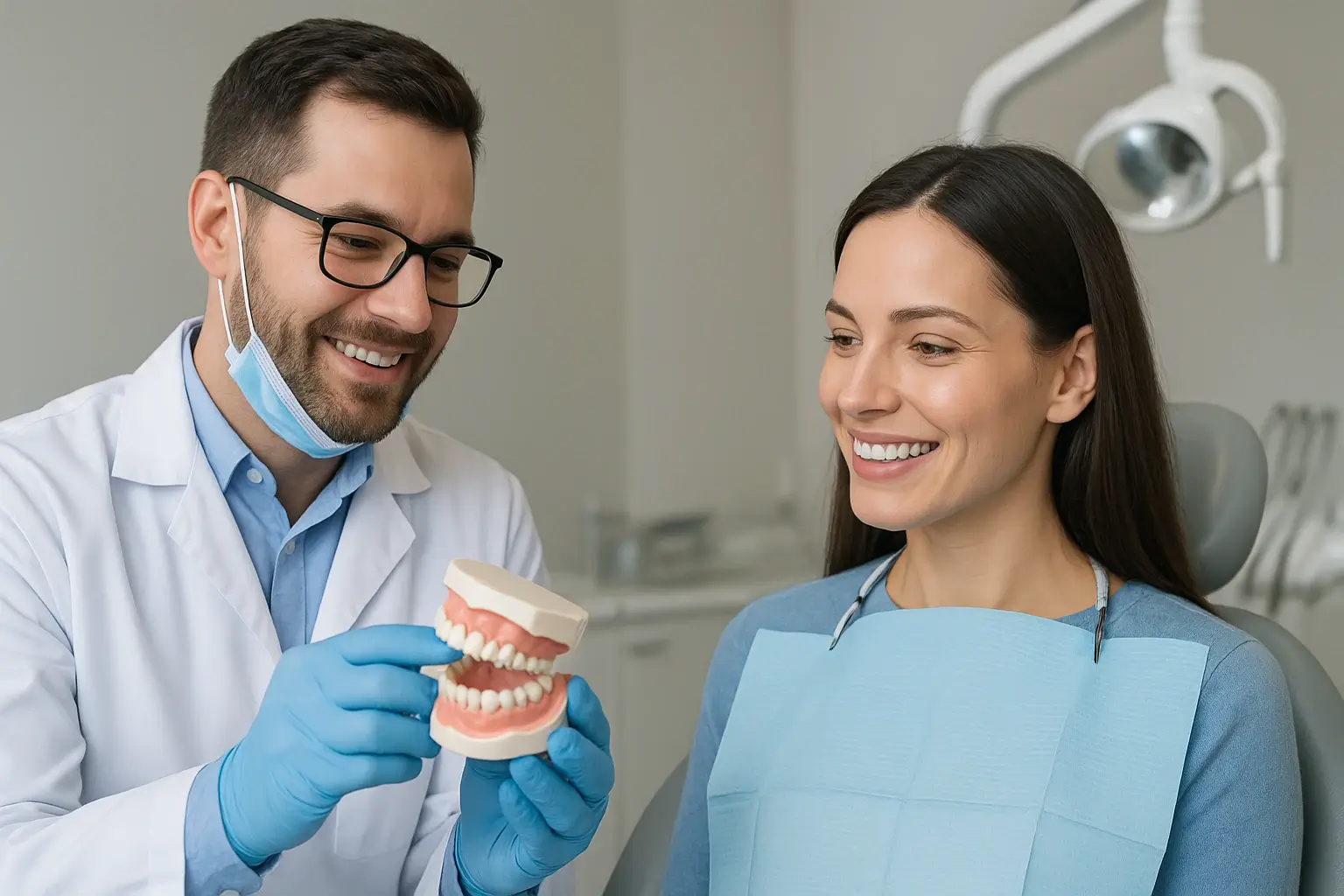
Complete Teeth Replacement Guide: Options for Missing Teeth
Expert advice from Bourne Dental on dental implants, bridges, and dentures. Discover the best solution for your smile and oral health.
Why Replace Missing Teeth?
Missing teeth affect more than just your smile. Beyond the aesthetic concerns, gaps in your dentition can lead to:
Shifting of adjacent teeth into the empty space
Bone loss in the jaw where the tooth root is missing
Difficulty chewing certain foods properly
Changes to your facial structure over time
Speech difficulties with certain sounds
Increased risk of decay and gum disease in harder-to-clean areas
Modern dentistry offers several effective solutions for tooth replacement. In this comprehensive guide, we’ll explore the three main options: dental implants, bridges, and dentures.
Dental Implants: The Gold Standard
Dental implants are widely considered the best solution for replacing missing teeth. They consist of a titanium post that is surgically placed into the jawbone, acting as an artificial tooth root. A custom-made crown is then attached to this post.
The Implant Process
Consultation and planning: Comprehensive examination, 3D scans, and treatment planning
Implant placement: Minor surgery to place the titanium post into the jawbone
Healing period: 3-6 months for osseointegration (bone fusing to the implant)
Abutment placement: Connecting piece attached to the implant
Crown attachment: Custom-made tooth cemented or screwed onto the abutment
Advantages
Most natural look and feel
Prevents bone loss by stimulating the jawbone
Doesn’t affect adjacent teeth
Extremely durable – can last a lifetime
Highest success rate (95-98%)
Considerations
Higher upfront cost
Longer treatment time
Requires minor surgery
Not suitable for everyone (requires adequate bone density)
Dental Bridges: Fixed Tooth Replacement
Dental bridges literally “bridge” the gap created by one or more missing teeth. A bridge consists of two or more crowns for the teeth on either side of the gap (abutment teeth) and a false tooth/teeth in between.
Types of Bridges
Traditional bridges: Most common type, with crowns on adjacent teeth
Cantilever bridges: Used when there are adjacent teeth on only one side
Maryland bonded bridges: Metal or porcelain wings bonded to adjacent teeth
Advantages
Faster process than implants (2-3 visits)
Less expensive than implants
No surgery required
Natural appearance
Considerations
Requires altering healthy adjacent teeth
Doesn’t prevent bone loss beneath the bridge
Shorter lifespan than implants (5-15 years)
More difficult to clean under the bridge
Dentures: Removable Tooth Replacement
Dentures are removable appliances that can replace missing teeth. They can be either partial (replacing some teeth) or complete (replacing all teeth in an arch).
Types of Dentures
Conventional dentures: Made after teeth have been removed and gums have healed
Immediate dentures: Made in advance and placed immediately after tooth extraction
Implant-supported dentures: Secured in place by dental implants for better stability
Advantages
Most affordable option
Non-invasive treatment
Can replace multiple teeth at once
Quick results
Considerations
Can feel bulky and take time to get used to
May affect speech initially
Require regular removal and cleaning
Don’t prevent bone loss
May need relining or replacement over time
Comparison of Tooth Replacement Options
Feature
Dental Implants
Dental Bridges
Dentures
Treatment Time
3-9 months
2-4 weeks
3-6 weeks
Cost (per tooth)
£2,000-£3,000
£800-£1,500
£300-£1,000
Lifespan
25+ years (often lifetime)
10-15 years
5-8 years
Bone Preservation
Yes
No
No
Adjacent Teeth
Unaffected
Must be prepared
May use clasps
Maintenance
Like natural teeth
Special flossing needed
Removable cleaning
Stability
Excellent
Good
Variable
Which Option Is Right For You?
The best tooth replacement option depends on several factors:
Consider Your:
Oral health: Condition of your gums and remaining teeth
Bone density: Whether you have sufficient jawbone for implants
Budget: Your financial considerations and insurance coverage
Timeframe: How quickly you need the replacement
Long-term goals: Your expectations for durability and maintenance
“At Bourne Dental, we believe in personalized treatment planning. During your consultation, we’ll take the time to understand your specific situation, concerns, and goals to recommend the best tooth replacement option for you.” – Dr. Ismail Qazi
FAQs About Teeth Replacement
How long does the dental implant process take?
The complete dental implant process typically takes 3-9 months. This includes the initial consultation, implant placement surgery, healing period (3-6 months for osseointegration), and finally placing the permanent crown. Complex cases or those requiring bone grafts may take longer.
Is the dental implant procedure painful?
Most patients report that dental implant surgery involves minimal discomfort. The procedure is performed under local anesthesia, and many patients compare it to having a tooth extraction. Post-operative discomfort is typically mild and can be managed with over-the-counter pain medication.
Can I get dental implants if I’ve had missing teeth for many years?
Yes, in many cases you can still get implants even if you’ve had missing teeth for years. However, prolonged tooth loss often leads to bone loss in the jaw. If this has occurred, you may need a bone graft procedure before implant placement to ensure there’s enough bone to support the implant.
How do I care for my dental bridge?
Dental bridges require special cleaning techniques. It’s essential to clean under the false tooth where the gum meets the bridge. We recommend using:
Special floss threaders or super floss to clean under the bridge
Interdental brushes to clean around the supporting teeth
Antibacterial mouthwash to reduce plaque buildup
Regular professional cleanings to maintain the health of supporting teeth
Are there financing options available for tooth replacement?
Yes, at Bourne Dental we offer several financing options to make tooth replacement more affordable:
Interest-free payment plans through our practice
Finance options through Tabeo with 0% interest available
Our practice membership plans that offer discounts on treatments
We can provide detailed treatment plans to help you submit insurance claims
During your consultation, we’ll discuss all available options to find a solution that fits your budget.
Next Steps: Book Your Consultation
If you’re considering replacing missing teeth, the first step is a comprehensive consultation at Bourne Dental. During this visit, we will:
Conduct a thorough examination of your oral health
Take necessary X-rays or 3D scans to assess your bone structure
Discuss your goals, concerns, and preferences
Explain all suitable treatment options in detail
Provide a clear treatment plan and cost estimate
Answer any questions you may have
Don’t let missing teeth affect your confidence, oral health, or quality of life. Contact us today to schedule your consultation and take the first step toward a complete, healthy smile.